Showing posts with label adapting. Show all posts

10 Apr 2019

Migration surprises keep coming.


Anthony Baker
I went to my Uncle Ant's funeral a few weeks ago. This meant a trip across the ditch (the Australian and New Zealand term for crossing the Tasman Sea to each other's country). I was unsure about going; I had visited my Sydney uncles eighteen months earlier, when they’d bantered like Morecambe and Wise. People close to me said I wouldn't regret it. They were right.

When the coffin left the chapel, my throat closed and my tear ducts opened. The tears weren't only for the person in the coffin, they were for all the people I have loved who I’m no longer am able to touch – my father, Ant’s eldest brother, being one of them.

When Dad was dying I received the call that said, if you want to see Dad alive you had better come now. Ant must have had the same call or email, because he arrived in Dad's hospital room a few hours after me.

Ant and his brother and sister had migrated to Australia in the sixties as ‘Ten pound Poms.’ As Ant's career was in shipping, London was a business destination, which meant we saw him more than our other Australian relatives. Ant would tell us about shark-infested beaches protected by nets, Christmas Day on the beach, and having so much sun you didn't want to go out in it. We were captivated. He became known as Uncle Australia.

Perhaps it was hearing his tales that made me open to living in another country. Like others who leave their homelands, I had assumed that migration was a mostly positive experience. Uncle Ant seemed happy. He was able to visit his parents and us, and his mother and father often went to see him and his family.

When Dad was dying, I had been living in New Zealand for ten years. I had three children under five.   I already had many doubts about bringing my children up in an environment very different to the one I was brought up in. Since Dad's diagnosis two years earlier, we had made two trips to see him while he was well. Saying goodbye each time was a punch on my heart.

I assumed it was only me who was struggling with living with a heart in two homes. I decided it was my habit of over-analysing, together with hormonal panics and self-doubt, making me feel so torn between the place I live and love, and the place I once lived and still love.

In the hospital, Ant and I talked about the journey over. He winced when he realised I’d left my young children behind. He listened when I told him how torn I felt. Then he said, almost casually, ‘It doesn't get any better, you just get more used to it.’

I had an ally. Here was someone who knew the feeling of being away from family, my sofa, my daily environment.  My father's brother knew what I was going through because he’d been through it himself and was going through it now with his brother.

It meant so much to me to have someone there who understood.

From that time on I realised that many migrants struggle with having a heart in two homes. I may have been irrational or over-sensitive, but even if I was, I now knew that I was not alone.

Twenty-two years later I was present for Ant's funeral. This time I didn't have to go around the world, only 'across the ditch.' I travelled with my sister Jaine, who has lived in New Zealand for the past eleven years.  During the sun-filled day we met up with ten of our cousins, their spouses and children, aunts, uncles and distant cousins. To be amongst such familiar and familial faces, mannerisms, stories and senses of humour was a joy. When my cousin Aiden scratched the right side of his neck with a pointed index finger, just as my twenty-two-year-old travelling nephew had when he’d stayed with us during the Christmas holidays, my sense of belonging swelled.  I don't think these two had met; I don't remember my grandparents having this mannerism and so perhaps it really was genes that dictated that hand gesture. Throughout the day family stories came out in a variety of themes, depending how the storyteller remembered them, or who had passed on the story to the storyteller. The new and retold stories were received equally keenly. Did I regret going to the funeral ? No way. I loved it. My belonging tank had been topped up.

Uncle Ant was my ally who helped me see how living far away can be managed. His funeral reminded me that our family may be scattered, but we are all part of a warm and caring family network. We are allies. We may be disconnected geographically but we are connected by history, by genes, and by caring and family love.

My paternal Grandparents Phil and Grace Baker. 3/5 of their children went to Australia in the sixties.
Farewell to Grace and Phil as they leave UK to visit the Australian relatives

24 Dec 2018

Homesickness? Last minute top tips for those away from home at Christmas Season


Tomorrow is Christmas day  in New Zealand. I am looking forward to it.

Until my mid-twenties Christmas was feasting on turkey and Christmas pudding with a large family, walking off the feast at dusk, (rarely in snow), and then snacking on Quality Street, cold turkey, satsumas and nuts as we slouched around the fire.

Then I did the traveling thing.

Christmas was full of differences. Long summer days, (not necessarily sunny), ham, salads and trifle and no family around. There was phone calls, but the longer the phone call was, the more you missed the people you talked to. We were apart.

Having spent over three decades, with a different Christmas, I have learnt to accept it for what it is. This year Christmas is different again, not because my two oldest are absent again, but because this time we have two lovely travelers with us, my nephew and his girlfriend. So migrants and travelers out there here are some tips for Christmas away from loved ones. I hope some of them help.


  • Every Christmas is different in some way. Christmas changes throughout your life. Acknowledge and delight in the differences of your unique Christmas this year.
  • If the Christmas you are spending is very different, look at it through, 'this is bizarre' eyes, and smile.
  • When connecting with distant loved ones on the day through phone/social media note:
    • The festivity is disjointed. You are in different time zones. For example, if you are in the same time zone as NZ, you do Christmas before anyone else. You are 'over Christmas' by 10pm whereas UK is just getting started at 9am. The atmosphere from either ends of the phone will be different which can add to the feelings of distance.
    • Keep the conversations short. The reception is likely to be weak and the phone call/Skype etc. is likely to be intermittent. Don't spend too long on the phone, just enough time to say I love you,  I miss you, (if you do), I hope you have a great day. Plan to have a chat soon to let them know how it went.
  • It is likely that you will feel sad at some stage in the day. That is okay. If you are much more sad than glad, make a list of what would make it better for you for next year.
  • For a variety of reasons you are not with some of your loved ones.  Remember you still can have a good day. Be positive about your presence.
  • If the people around you do not ask, offer as a conversation piece, the highlights of your Christmas day, and how it is different, but avoid whose Christmas is better. Christmas is not a competition. Every Christmas is different in some way.


I would like to wish you a meaningful unique Christmas, and a season where the peace, hope and love lasts much longer than the leftovers.


5 May 2018

What is wrong with fitting in?

When I had been in New Zealand for about five years I was compared to another English migrant who “didn’t fit in as well as you do.” This got me thinking. I had worked hard at fitting in. I had listened more than talked with my husbands' friends and family, I had stopped telling jokes that had shocked, but still  laughed at jokes I didn't understand, I could even name most of the beloved All Blacks rugby team. I had tried to fit in as much as possible. I had  completed all the requirements possible to be an acceptable New Zealander. And yet I wasn’t. I felt like an observer, the polite guest who could only share my opinions in a guarded manner.  I had been trying too hard to fit in. I feared being a perpetual outsider.

A few years later I decided I am not nor will ever be a New Zealander. I am an English person who is enjoying living in New Zealand. I was different. I was an outsider, but that was okay. 

BrenĂ© Brown, one of the world’s greatest influencers in the realms of leadership and change, studies courage, vulnerability, shame, and empathy. Her TED talk is one of the five most-watched TED talks in the world. In an article Brown wrote for Oprah.com, Brown explains the difference between fitting in and belonging:

"In fact, fitting in is the greatest barrier to belonging. Fitting in, I've discovered during the past decade of research, is assessing situations and groups of people, then twisting yourself into a human pretzel in order to get them to let you hang out with them. Belonging is something else entirely—it's showing up and letting yourself be seen and known as you really are—love of gourd painting, intense fear of public speaking and all.
Many of us suffer from this split between who we are and who we present to the world in order to be accepted, (Take it from me: I'm an expert fitter-inner!) But we're not letting ourselves be known, and this kind of incongruent living is soul-sucking."
Many communities have a quirky member. In You don't need to fit in to belong Jenny Lind Schmitt describes a member of a Swiss village that is different to the rest of the community, but adds a colour and vibrancy to the community. Madame Cardozo doesn't fit in, but does belong. It was suggested by Schmitt that it was time that made Madame Cardozo belong.

It took time for me to feel a sense of belonging. The belonging came through work, the contributions I made to my community, reaching out for a support network where help was able to be given and received, being a parent of children growing up in New Zealand, volunteering in my children's schools, sharing life events with friends and my husband's family, being part of a church. Anywhere where my contribution or potential contribution was valued, that was where I felt a sense of belonging.

As a migrant, you will be different. It is likely that you will try to fit in, especially in the early years. This may be for survival mentally or physically. What is wrong with fitting in? There are levels of fitting in that are unhealthy. You need to be aware of the uncomfortable feeling that you are over-compromising yourself, 'twisting yourself into a human pretzel' just for the sake of fitting in. Will you feel a sense of belonging if you haven't been revealing your true self? Brene Brown thinks not.
Because true belonging only happens when we present our authentic, imperfect selves to the world, our sense of belonging can never be greater than our level of self-acceptance.-Brene Brown

There will be a time when you will be accepted into your community. It will be the time when you, and your differences are recognised as providing a positive aspect to the community; the food you bring, the volunteering, the fresh insights, the comparative opinions, the acknowledgement that there is another way of being or doing that is not wrong, your artistic talents. (See a previous blog 12 Reasons why migrants make good artists.) At this time you will feel and enjoy the sense of belonging in your host country. Enjoy that feeling and be glad that you didn't sell yourself out too much when trying to fit in.


5 Apr 2018

Why is belonging so important?

Does a migrant need to have a sense of belonging? Yes. Here is why.


'Belongingness' is the human emotional need to be an accepted member of a group.
Maslow's hierarchy of needs rates it  after food, water and safety. We are a sociable animal.


A feeling of belonging helps you to:

  1. Have a healthy self esteem. Being wanted and loved makes you feel valued.
  2. Have somewhere to go for help through your support network e.g. How do I find a doctor?
  3. Help others. Being needed  helps our self esteem. In fact the motivation to help is so strong that even slaves set up a group help-fund to help each other. Every volunteer is satisfying the need to help others. "For it is in giving that we receive" St Francis of Assisi
  4. Feel a sense of identity. You are part of a group.
  5. Be more at ease about migrating. You are more rooted to the place around you.
  6. Make sense of the world around you. You have a group of people to share and compare your thoughts, opinions and concerns.
  7. Be more productive with a healthy self esteem and peace of mind.

When you do not feel you belong, you:

  1. Have isolation and mental health issues. 
  2. Are less motivated (Stanford University Associate Professor of Psychology, Greg Walton's  studies demonstrated that a sense of social belonging can affect motivation and continued persistence, even on impossible tasks. That is, if you don't feel like you belong, you are both less motivated and less likely to overcome obstacles.)
  3. Being less likely overcome obstacles, you may question your reason for migrating, you may consider returning to your country of origin when times get tough.
  4. Will feel lonely. 

Humans have an emotional need to be part of something that is greater than themselves. Migrants, who have left so much of their sense of belonging behind, have this same desire to want to be part of something.

In a migrant's initial years they will be clutching at ways to replace the sense of belonging they have left behind. Often the first group they may feel a sense of belonging with is other migrants with their experiences of migration. If these migrants are also from their country of origin, there may be a greater sense of belonging. Joining migrant cluster groups are best if the migrant doesn't rely on them solely. An interviewee from India in my book, said in her adopted country she and her husband, 'latched onto' an Indian community.
"I felt I had swapped one India for another." Not having any sense of belonging with her adopted country, she and her husband considered returning to India. A job offer in a different city came up and they decided to try again."We decided we wouldn't seek out Indian people, but would integrate with the society there. That was the winning thing, we actually got to know other people." At a later stage Nina's mother in law came to live with them. Her mother-in-law needed a slower pace to integrate, so Nina and her husband became involved in the Indian community too. "This way we now have two groups of friends and it works well."
Other interviewees have recommended, going to the library, joining more than one group in case the group you have chosen folds.

What else can a migrant do to help their sense of belonging?

  1. Be ready to give. A sense of belonging is about reaching out for friendship, and about being able to give back. If you are part of a group or community, you have talents that will be needed some day. When the opportunity comes, give! Volunteering is an excellent way to start.  John O’Brien once said, “It is dispiriting to always be the needy one.” Our souls are deprived of the chance to make a difference to others.
  2. Try and identify what has made you feel you belong in the past? How can you make that happen again? David Pitonyak, The Importance of Belonging includes an exercise on creating more inclusive environments by examining what it feels like to be excluded, what it feels like to be included and identifying what can be done to help people feel more included and increase their sense of belonging.
  3. If making friends seems a problem, Susan Kurliak and Johanna Johnson have 101 suggestions in their book 101 Ways to Make Friends. Here are some samples.
#37 Have one good joke you can tell. Practice it so you’re ready when there’s a gap in the conversation — be known as the one who made everyone feel comfortable.
#75 Collect something, and talk to others who share your passion...coins, hats, ceramic elephants, Elvis memorabilia…
#82 Give yourself permission to miss the mark. Nothing is going to be perfect the first time — to make one friend we need to meet a whole lot of people who won’t be our friends. Just keep trying.

What can people, organisations, and countries do to increase sense of belonging?


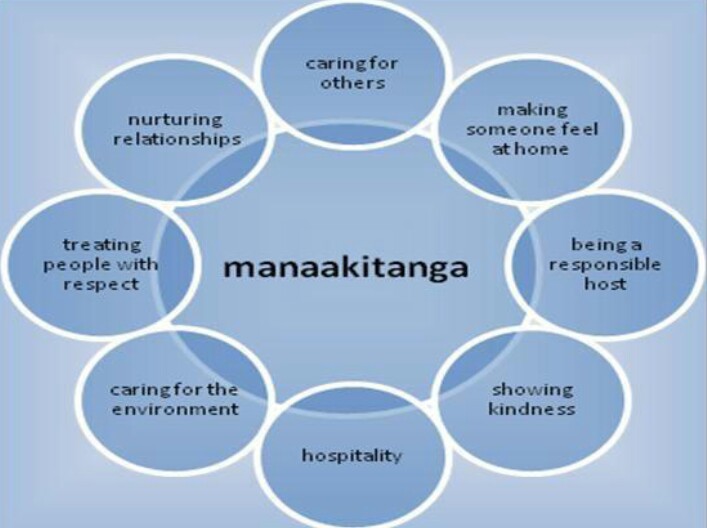
  • Maori, the New Zealand indigenous people have an expression, Manaakitanga. This is the Maori style of hospitality. Manaakitanga greeted early settlers to New Zealand. In an event to celebrate Chinese New Year, Chinese migrants who had been in New Zealand for over two decades were re-welcomed in a Powhiri (Maori welcome) in the spirit of Manaakitanga. The Chinese migrants said through this event they felt more of a sense of belonging to New Zealand than through two decades of being a migrant in New Zealand. The reasons for this extra sense of belonging could be put down to some spiritual similarities between Chinese and Maori, and or that the holistic and ceremonial welcoming supported the migrants'emotional need to belong more than a stamp in their passport.


  • Be proactive in welcoming migrants. Many countries have a welcoming communities operation running. By typing in welcoming and the country you are in you are likely to find web sites for your host country.Here are some examples.

Welcoming Communities NZ 
Newcomers Network NZ
https://welcomingcities.org.au/
https://www.welcomingamerica.org/programs/member-municipalities

  • There is more help on support networks in my book, The Emotional Challenges of Immigration Chapter 4 - Support Networks. Read it for free here.


Other useful links

http://www.saywhydoi.com/belonging-why-do-we-need-a-sense-of-belonging/
https://livelifegetactive.com/blog/sense-of-belonging/
https://barbarabray.net/2017/08/02/8-tips-to-foster-a-sense-of-belonging/
https://www.europelanguagejobs.com/blog/make-friends-abroad

12 Feb 2018

Three Painful Questions for Migrants


Where are you from?  Do you like it here?  Do you like it there?
These questions said with the best intentions, often as a conversation opener, repeated often enough can eat away at migrants and make them feel isolated.

Where are you from?

Accent, appearance, language, make it obvious a migrant is different to the native born. The question 'Where are your from?' although may be said with the best intentions, is a reminder to the migrant that they are not from here. In Sapiens: A Brief History of Humankind by Yuval Noah Harari, Harari suggests Homo sapiens  default to an 'Us and them' social structure. You are with us or not. He points out that in many cultures the word used to describe any one not born in the area or country to being similar to a description of non-people. 'Where are you from?' can be taken as you don't belong as much as me. Other perils of the question where are you from is discussed more in an earlier blog. Read more here.


Do you like it here? 

When this question is asked the migrant is doomed. By the fact the migrant has lived in two countries, they have a comparative point of view. Transport networks, climate, housing. they have experienced both and can see the advantages and disadvantages of each.

If the migrant is honest, and some cultures are more honest than others, he/she may say something like, I love the climate, culture and people, but I think the transport system or lack of it is frustrating. The criticism sticks out. Even such a cushioned honest reply from the migrant may cause the native born to think or say, 'Why don't you go back home then? '

Why is criticism not taken well? Because the migrant can be likened to a guest, and guests don't insult their hosts. Imagine you are invited to dinner, your host asks you whether you enjoyed the meal. If you reply that it was lovely except the main course was a little underdone, there will be unease.  A guest has expected behaviour. Often migrants have to accentuate the positive. And until they find someone who can receive the migrant's honest observations or criticism, they may have to bottle up any negative feelings about the country they have chosen to live in. A migrant, you are a guest in your host country.

Do you like it there?

When a migrant visits their homeland, they may yearn to be honest with their loved ones. Again they have a comparative opinion, and they have chosen to 'give up' their homeland. One of my sisters once said to me, "Where you are living better be a great place, because you have given up so much to be there."

The question 'Do you like it there?' should be treated with caution. Every positive of your host country is a negative score for your homeland. If you point out all the host country negatives that you can't share with native born of your host country, your loved one may wonder why you are still there. It can be safer to accentuate the positives of the things you miss in your homeland, and even be prepared to be told it is not like that any more. As a migrant, you may have to behave as a guest in your homeland.

These questions are a constant reminder that you are don't belong, and although you have a comparative opinion, it is not always welcome.You are a guest in two homes.


What can you do?

  1. Talk to other migrants, as they are unlikely to take offense when you are making comparisons. 
  2. Accept that like a permanent traveller, you will always be reporting on the positives.
  3. If you are never able to speak your mind, seek someone who you can offload to. I have come across two women who bottled up their grievances for over twenty years, so much so that they became sick.
  4. Journal your observations.
  5. Research on line for other migrants. There are often country specific blogs that you can post your feelings on and feel you are heard.
  6. Reviews and comments about my book have focused on the relief a migrant has felt in knowing other migrants felt the same way. 


21 Nov 2017

Overqualified migrants. What are the impacts? What can help?

This post will  review the:

  • The negative effects of overqualified or underemployed migrants for the host country.
  • What can help migrants who are overqualified?
The previous post Why are migrant doctors driving taxis? looked at:
  • Reasons behind migrants being overqualified
  • How does overqualification affect migrants?

The negative effects of overqualified or underemployed migrants for the host country.

1.      Migrants employed in low skilled jobs with a low esteem may decrease productivity.
2. The host country becomes over-reliant on skilled labour at a low rate. This cheap labour may not be sustainable. When an English person was asked what she thought after Brexit was voted for, they said, 

“Get rid of the migrants, but not my Polish plumber. He is so skilled and cheap.”
Other examples of over-reliance on cheaper immigrant labour are in aged care places, where migrants often qualified nurses are low-paid carers, or the dairy industry in NZ, which has become reliant on Filipino workers.

3. The migrant, dissatisfied and unable to live the dream, repatriates. The host country’s immigration department investment in that person is lost. As the migrant goes ‘home’ and describes their experience, the country loses out on other potential migrants. According to Helpscout, it takes twelve positive experiences to make up for one negative experience. An article in the NZ Herald in September 2017 headlined “Don’t come to New Zealand British teachers warned colleagues back home” highlighted that the process of qualification recognition was costly and in some cases unrealistic.

4. Losing labour when immigration policies change. NZ recently announced a salary of $48,000 to determine whether a migrant is skilled. A salary below $48,000 meant that you were unskilled.

“The rules were due to come into effect next month, and included a minimum annual income of $48,000 for jobs currently considered skilled. It would force immigrants to leave for at least 12 months after three years of working here.” Radio NZ

5. Marginalised migrants gather and take solace in clusters. These clusters or ‘ethnic groups’ can create friction with the native born as the group increases in number, strength and unity. Immigrants become perceived in stereotypes rather than as individuals. The groups are harder to integrate into the community.

What can help overqualified migrants?

  1. Be well-researched on the requirements of the country.
  2. Accept that unless you have been headhunted for a position, being underemployed for a while may help you have the energy to get to know the country you are in.
  3. Have your qualifications recognised by an international standard before you migrate.
  4. Improve your language of the host country.
  5. Make connections with people in the host country so that when an opportunity comes up, you can take it.
  6. Re-evaluate why you wanted to migrate. Was it employment prospects, lifestyle or other reasons?
  7. Seek out other migrants who feel similarly. Support each other and campaign for greater recognition of workplace diversity and reduction of discrimination.


Below are two websites that are helping migrants to become fully employed. Hopefully internet searching for professional migrant help in your host country will help you find ways to reach your full potential when you ready.

Skilled Migrant Programme New Zealand

1 Dec 2016

Underwear-undercover familiarity

This is not a knicker fetish

This was originally posted on my newsletter. I thought it worth posting on my blog.
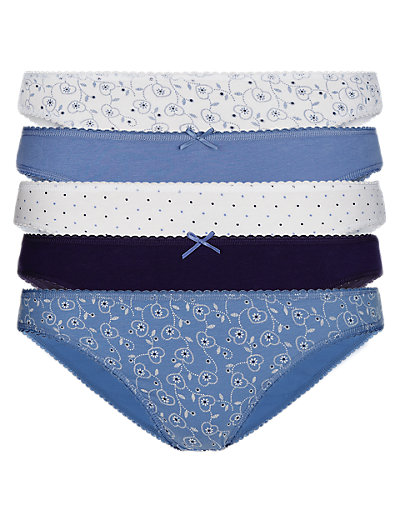
    Why do I keep buying M&S knickers?
M&S knickers    I don’t have an underwear fetish, but as my lingerie drawer contents is looking more like  ‘lingertoolong’ underwear, my thought process jumps to - need more M&S knickers, about time I went to M&S, England. 
    I hear you cry, ‘Why not buy online!

7 Apr 2016

Technology trials away from home 101.


I bought myself a Surface Pro a week before my flight to visit my family in UK. I had visions of hours learning the ins and outs of the Pro while travelling from New Zealand. The learning didn't happen. Why?
These were the things I didn't take into account:

25 Sept 2015

Do you have cultural intelligence?

How well do you communicate with other cultures? Do you make blunders? Have a look at the Newsletter 13 to find out more and see great examples of some of the mistakes you might be making.

Season confusion? Why? Suggestions in the Newsletter 13