Showing posts with label isolation. Show all posts

12 Jun 2020

How has Covid19 affected migrants? What helps?


Our era of Covid19 has been scary. I have felt a heightened tension throughout the lockdown. Tears well easily. Global uncertainty is the new normal. The only certainty is that there is more uncertainty and economic hard ship to come.

How has Covid19 affected migrants?  Here are some challenges I have become aware of. Please feel free to add your experiences to this blog in the comments below.

Panic reactions 

We all had to prepare for an unknown. Stay at home. Stay safe.  Be kind.   Free movement stopped. We  waited to be guided or dictated to. Reactions were varied. Panic buying relatively harmless; racial slurs and attacks harmful. Racial tension was real, particularly towards the Chinese. Trump called the virus, "The Chinese virus." People of Asian appearance were asked to leave buses or establishments.
"Outbreaks create fear, and fear is a key ingredient for racism and xenophobia to thrive." LancetVol395
 It was as if there had to be blame. If not the Governments then who?

Other experiences has shown that people have grabbed at opportunities to be kind. A Chinese migrant told me that she was afraid at first of racism as a result of Covid19, but instead people asked how her family in China were coping.

Visiting rights ended 

As migrants we count on keeping up connection with our family and loved ones by visiting or having visitors. About every two years I would feel a pull to "go home."  That pull may be  felt more frequent if your loved ones are unwell. Having visitors come to you helps postpone that pull. In a pre-Covid19 world the frequency of visits was determined by many factors. At the moment our visiting rights have stopped. Even if we win lotto we are unable to see our overseas loved ones.  There is no way to plan for a visit in the near future. We are all on hold. I feel so sad for those who have had the death of a loved one. I can't imagine the feelings they experience when there was no way to be where you would most want to be to share the grief. Our choices have been limited. We can do nothing but wait.

Support Network

I have promoted the importance of a migrant having a good support network in my book and blogs. This support network may be in the form of a neighbour, a colleague from a place of work, volunteering or group. A person or people who will look out for you and who you can look out for.  Covid19 is a time where you will appreciate the support network you have, or will realise that you don't have one. As migrants we can be inclined to 'not make a fuss' not appear to ask for anything. (We are like a guest in the home we have chosen.) With no support network a migrant may miss out on what is available to them.
It was great to hear that migrants helping other needy migrants, guessing that lack of knowledge or fear had prevented the needy from making them selves known. Giving and receiving makes both parties feel better.

Employment 

Will migrants be more likely to be unemployed? Maybe, but as a migrant you have the advantage of adapting, being flexible, and knowing what is most important to you. Your proven adaptability may make you the most desirable employee.

I have always said migrants are motivated. They have already shown they can adapt. They have moved themselves and their families from their country of origin to a new home. In times of economic hardship it may be that migrants adaptability makes them more employable.

How can we get over these challenges?

Strategies:


  • Report any racism. If not to officials, to someone who cares. Having a good listening ear can take the burden from you and let others know that racism is happening. Focus on those that have not been racist.
  • If you are lacking a support network then this is a time to build one up. Do something for a neighbour. Contact the local councils/libraries/help lines to find out what is available to help you.
  • Keep  contact with your loved ones through Zoom, Skype, Messenger. Write a letter, it may take ages to get to the destination, but it will bring joy when it arrives.
  • Accept that this is a time where there are no visits or visitors. A fallow field. An intermission from the plans of the next physical connection. We may treasure the freedom to connect all the more.
  • Migrants are motivated. If you lose your job, present yourself as skilled, adaptable and flexible. Keep active by volunteering.


Positive thoughts to hold onto:
The whole world is living with uncertainty. Migrants or not there is a belonging in that uncertainly.
There are heightened emotions. We may need to look at how we are reacting to loosen the tension. Matt Heath in "Stressed out?" highlighted:
"The more we value the things outside our control, the less control we have" Epictetus
"The whole future lies in uncertainty so live immediately." Seneca
"If it is not right do not do it; if it is not true do not say it." Marcus Aurelius

I feel I have been fortunate during Covid19. I managed to see my family last December and I have been able to continue working. My insights could be narrow. Please feel free to share your experiences to help other migrants.

Other Links
https://migrationdataportal.org/themes/migration-data-relevant-covid-19-pandemic

5 Apr 2018

Why is belonging so important?

Does a migrant need to have a sense of belonging? Yes. Here is why.


'Belongingness' is the human emotional need to be an accepted member of a group.
Maslow's hierarchy of needs rates it  after food, water and safety. We are a sociable animal.


A feeling of belonging helps you to:

  1. Have a healthy self esteem. Being wanted and loved makes you feel valued.
  2. Have somewhere to go for help through your support network e.g. How do I find a doctor?
  3. Help others. Being needed  helps our self esteem. In fact the motivation to help is so strong that even slaves set up a group help-fund to help each other. Every volunteer is satisfying the need to help others. "For it is in giving that we receive" St Francis of Assisi
  4. Feel a sense of identity. You are part of a group.
  5. Be more at ease about migrating. You are more rooted to the place around you.
  6. Make sense of the world around you. You have a group of people to share and compare your thoughts, opinions and concerns.
  7. Be more productive with a healthy self esteem and peace of mind.

When you do not feel you belong, you:

  1. Have isolation and mental health issues. 
  2. Are less motivated (Stanford University Associate Professor of Psychology, Greg Walton's  studies demonstrated that a sense of social belonging can affect motivation and continued persistence, even on impossible tasks. That is, if you don't feel like you belong, you are both less motivated and less likely to overcome obstacles.)
  3. Being less likely overcome obstacles, you may question your reason for migrating, you may consider returning to your country of origin when times get tough.
  4. Will feel lonely. 

Humans have an emotional need to be part of something that is greater than themselves. Migrants, who have left so much of their sense of belonging behind, have this same desire to want to be part of something.

In a migrant's initial years they will be clutching at ways to replace the sense of belonging they have left behind. Often the first group they may feel a sense of belonging with is other migrants with their experiences of migration. If these migrants are also from their country of origin, there may be a greater sense of belonging. Joining migrant cluster groups are best if the migrant doesn't rely on them solely. An interviewee from India in my book, said in her adopted country she and her husband, 'latched onto' an Indian community.
"I felt I had swapped one India for another." Not having any sense of belonging with her adopted country, she and her husband considered returning to India. A job offer in a different city came up and they decided to try again."We decided we wouldn't seek out Indian people, but would integrate with the society there. That was the winning thing, we actually got to know other people." At a later stage Nina's mother in law came to live with them. Her mother-in-law needed a slower pace to integrate, so Nina and her husband became involved in the Indian community too. "This way we now have two groups of friends and it works well."
Other interviewees have recommended, going to the library, joining more than one group in case the group you have chosen folds.

What else can a migrant do to help their sense of belonging?

  1. Be ready to give. A sense of belonging is about reaching out for friendship, and about being able to give back. If you are part of a group or community, you have talents that will be needed some day. When the opportunity comes, give! Volunteering is an excellent way to start.  John O’Brien once said, “It is dispiriting to always be the needy one.” Our souls are deprived of the chance to make a difference to others.
  2. Try and identify what has made you feel you belong in the past? How can you make that happen again? David Pitonyak, The Importance of Belonging includes an exercise on creating more inclusive environments by examining what it feels like to be excluded, what it feels like to be included and identifying what can be done to help people feel more included and increase their sense of belonging.
  3. If making friends seems a problem, Susan Kurliak and Johanna Johnson have 101 suggestions in their book 101 Ways to Make Friends. Here are some samples.
#37 Have one good joke you can tell. Practice it so you’re ready when there’s a gap in the conversation — be known as the one who made everyone feel comfortable.
#75 Collect something, and talk to others who share your passion...coins, hats, ceramic elephants, Elvis memorabilia…
#82 Give yourself permission to miss the mark. Nothing is going to be perfect the first time — to make one friend we need to meet a whole lot of people who won’t be our friends. Just keep trying.

What can people, organisations, and countries do to increase sense of belonging?


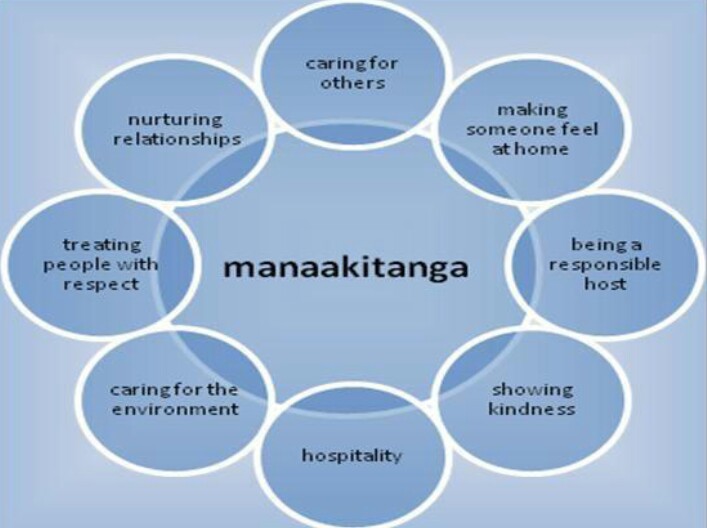
  • Maori, the New Zealand indigenous people have an expression, Manaakitanga. This is the Maori style of hospitality. Manaakitanga greeted early settlers to New Zealand. In an event to celebrate Chinese New Year, Chinese migrants who had been in New Zealand for over two decades were re-welcomed in a Powhiri (Maori welcome) in the spirit of Manaakitanga. The Chinese migrants said through this event they felt more of a sense of belonging to New Zealand than through two decades of being a migrant in New Zealand. The reasons for this extra sense of belonging could be put down to some spiritual similarities between Chinese and Maori, and or that the holistic and ceremonial welcoming supported the migrants'emotional need to belong more than a stamp in their passport.


  • Be proactive in welcoming migrants. Many countries have a welcoming communities operation running. By typing in welcoming and the country you are in you are likely to find web sites for your host country.Here are some examples.

Welcoming Communities NZ 
Newcomers Network NZ
https://welcomingcities.org.au/
https://www.welcomingamerica.org/programs/member-municipalities

  • There is more help on support networks in my book, The Emotional Challenges of Immigration Chapter 4 - Support Networks. Read it for free here.


Other useful links

http://www.saywhydoi.com/belonging-why-do-we-need-a-sense-of-belonging/
https://livelifegetactive.com/blog/sense-of-belonging/
https://barbarabray.net/2017/08/02/8-tips-to-foster-a-sense-of-belonging/
https://www.europelanguagejobs.com/blog/make-friends-abroad

21 Nov 2017

Overqualified migrants. What are the impacts? What can help?

This post will  review the:

  • The negative effects of overqualified or underemployed migrants for the host country.
  • What can help migrants who are overqualified?
The previous post Why are migrant doctors driving taxis? looked at:
  • Reasons behind migrants being overqualified
  • How does overqualification affect migrants?

The negative effects of overqualified or underemployed migrants for the host country.

1.      Migrants employed in low skilled jobs with a low esteem may decrease productivity.
2. The host country becomes over-reliant on skilled labour at a low rate. This cheap labour may not be sustainable. When an English person was asked what she thought after Brexit was voted for, they said, 

“Get rid of the migrants, but not my Polish plumber. He is so skilled and cheap.”
Other examples of over-reliance on cheaper immigrant labour are in aged care places, where migrants often qualified nurses are low-paid carers, or the dairy industry in NZ, which has become reliant on Filipino workers.

3. The migrant, dissatisfied and unable to live the dream, repatriates. The host country’s immigration department investment in that person is lost. As the migrant goes ‘home’ and describes their experience, the country loses out on other potential migrants. According to Helpscout, it takes twelve positive experiences to make up for one negative experience. An article in the NZ Herald in September 2017 headlined “Don’t come to New Zealand British teachers warned colleagues back home” highlighted that the process of qualification recognition was costly and in some cases unrealistic.

4. Losing labour when immigration policies change. NZ recently announced a salary of $48,000 to determine whether a migrant is skilled. A salary below $48,000 meant that you were unskilled.

“The rules were due to come into effect next month, and included a minimum annual income of $48,000 for jobs currently considered skilled. It would force immigrants to leave for at least 12 months after three years of working here.” Radio NZ

5. Marginalised migrants gather and take solace in clusters. These clusters or ‘ethnic groups’ can create friction with the native born as the group increases in number, strength and unity. Immigrants become perceived in stereotypes rather than as individuals. The groups are harder to integrate into the community.

What can help overqualified migrants?

  1. Be well-researched on the requirements of the country.
  2. Accept that unless you have been headhunted for a position, being underemployed for a while may help you have the energy to get to know the country you are in.
  3. Have your qualifications recognised by an international standard before you migrate.
  4. Improve your language of the host country.
  5. Make connections with people in the host country so that when an opportunity comes up, you can take it.
  6. Re-evaluate why you wanted to migrate. Was it employment prospects, lifestyle or other reasons?
  7. Seek out other migrants who feel similarly. Support each other and campaign for greater recognition of workplace diversity and reduction of discrimination.


Below are two websites that are helping migrants to become fully employed. Hopefully internet searching for professional migrant help in your host country will help you find ways to reach your full potential when you ready.

Skilled Migrant Programme New Zealand

5 Oct 2017

Why are migrant doctors driving taxis?


 “On average across OECD countries, 28.3% of highly educated immigrants are formally overqualified for the job they hold compared with less than 17.6% for the native-born.” Settling In: OECD Indicators of Immigrant Integration 2012


Cleaners who are professors, road workers who are engineers, farm workers who are vets and doctors who drive taxis; why are so many migrants are overqualified? This blog is in two parts and will consider the following:
  • Reasons behind migrants being overqualified
  • How does overqualification affect migrants?
  • The negative effects of overqualified or underemployed migrants for the host country.
  • What will help migrants who are overqualified?

  • Reasons behind migrants being overqualified

1.     Migrant qualifications may not be recognised in their host country. Professionals (engineers, doctors, nurses, professors) often must go through a registration process or assimilation process to bring them ‘up to standard.’ This registration process is often time- and money-consuming and may not be the highest priority for the migrant when they first arrive.

2. Migrant education may not be recognised. Data from the Office of National Statistics on immigration of Eastern Europeans in the UK showed,
“A full 40% of EU8 workers in the survey were over-qualified for the job they were doing, due to the impossibility of converting their home academic titles into a same-level UK one.” International Business Times

3. The primary reason for migration was not to use their skill set. The migrant did not migrate expecting to use their skills, although they might like to. Not expecting to use their skills, may be due to:

a. A migrant may have migrated to be with their spouse or family member whose skill set had been in demand.
b. They were an ‘economic migrant.’ Countries offer immigration if the migrant invests in the host country.
c. Humanitarian reasons, political asylum or refugee.

4. The host country may have a drive for labour in an industry, for example the dairy industry in NZ.

“Dairy farms employ hundreds of migrant workers. It's estimated that 15 per cent of all dairy farm employees aren't New Zealand citizens or permanent residents. “ NZ Farmer.co.nz
These employees are on work visas, their qualifications and experience may not match the work they are doing, but the hope of becoming permanent residents is enough for them to work even if they are underemployed.

5. The language differences may cause a lack of confidence in communicating or promoting themselves at a professional level.

6. Migrants are discriminated against. Mai Chen said,
 "Discrimination is actually preventing New Zealand from fulfilling its full potential."

7. Skilled workers often choose or resort to being self-employed as an attractive alternative to employment. A restaurant or food provider, a stall or a ‘two dollar shop’ or franchise can be a preferable means of employment due to:

a. Fulfilling the immigration requirement in its economic form such as a business visa, where the migrant must show that they can manage a business with staff and budgets etc.
b. Being self-employed can limit being marginalised. In a large organisation a migrant runs the risk of being marginalised, through their accent, their language, their appearance or the fact that they are more qualified than their peers or superiors.

  • How does overqualification affect migrants?

      
1.Survival first. A conversation recently with a Russian migrant to New Zealand reminded me that initially a migrant’s need is survival. Moving to a new country there are so many changes for their brain to get used to (culture shock) that adapting to those changes consumes energy. On Maslow’s hierarchy of needs, a new migrant’s immediate needs are at the bottom of the pyramid, the physiological and safety level. At this early stage of migration, underemployment can be perceived to be acceptable, even desirable. Later, and this may be a few years or decades, the underemployment may have a detrimental effect.

2. Undervalued. A migrant being unable to put their experience and qualifications to use, or not being valued or recognised for their full potential, can cause anger and frustration.

3. Isolation. A migrant can feel isolated because their co-workers feel too different to them. Having a higher qualification can be added to the reasons their co-workers feel different to them, such as accent, language and appearance.

4. High expectations on their children. Second generation migrants often achieve a higher level of employment than their parents. The second generation doesn’t have to familiarise themselves with education or the idiosyncrasies of a different country. The children of migrants may feel extra pressure to succeed in a way that their parents couldn’t.

5. Poverty, as you are not meeting the needs of your family in your host country, and/or your remittance expectations to your country of origin.


My next post will continue this subject with:
  • The negative effects of overqualified or underemployed migrants for the host country.
  • What can help overqualified migrants?
I would love to hear your experiences and comments. Post them below.