Showing posts with label disconnection. Show all posts

12 Jun 2020

How has Covid19 affected migrants? What helps?


Our era of Covid19 has been scary. I have felt a heightened tension throughout the lockdown. Tears well easily. Global uncertainty is the new normal. The only certainty is that there is more uncertainty and economic hard ship to come.

How has Covid19 affected migrants?  Here are some challenges I have become aware of. Please feel free to add your experiences to this blog in the comments below.

Panic reactions 

We all had to prepare for an unknown. Stay at home. Stay safe.  Be kind.   Free movement stopped. We  waited to be guided or dictated to. Reactions were varied. Panic buying relatively harmless; racial slurs and attacks harmful. Racial tension was real, particularly towards the Chinese. Trump called the virus, "The Chinese virus." People of Asian appearance were asked to leave buses or establishments.
"Outbreaks create fear, and fear is a key ingredient for racism and xenophobia to thrive." LancetVol395
 It was as if there had to be blame. If not the Governments then who?

Other experiences has shown that people have grabbed at opportunities to be kind. A Chinese migrant told me that she was afraid at first of racism as a result of Covid19, but instead people asked how her family in China were coping.

Visiting rights ended 

As migrants we count on keeping up connection with our family and loved ones by visiting or having visitors. About every two years I would feel a pull to "go home."  That pull may be  felt more frequent if your loved ones are unwell. Having visitors come to you helps postpone that pull. In a pre-Covid19 world the frequency of visits was determined by many factors. At the moment our visiting rights have stopped. Even if we win lotto we are unable to see our overseas loved ones.  There is no way to plan for a visit in the near future. We are all on hold. I feel so sad for those who have had the death of a loved one. I can't imagine the feelings they experience when there was no way to be where you would most want to be to share the grief. Our choices have been limited. We can do nothing but wait.

Support Network

I have promoted the importance of a migrant having a good support network in my book and blogs. This support network may be in the form of a neighbour, a colleague from a place of work, volunteering or group. A person or people who will look out for you and who you can look out for.  Covid19 is a time where you will appreciate the support network you have, or will realise that you don't have one. As migrants we can be inclined to 'not make a fuss' not appear to ask for anything. (We are like a guest in the home we have chosen.) With no support network a migrant may miss out on what is available to them.
It was great to hear that migrants helping other needy migrants, guessing that lack of knowledge or fear had prevented the needy from making them selves known. Giving and receiving makes both parties feel better.

Employment 

Will migrants be more likely to be unemployed? Maybe, but as a migrant you have the advantage of adapting, being flexible, and knowing what is most important to you. Your proven adaptability may make you the most desirable employee.

I have always said migrants are motivated. They have already shown they can adapt. They have moved themselves and their families from their country of origin to a new home. In times of economic hardship it may be that migrants adaptability makes them more employable.

How can we get over these challenges?

Strategies:


  • Report any racism. If not to officials, to someone who cares. Having a good listening ear can take the burden from you and let others know that racism is happening. Focus on those that have not been racist.
  • If you are lacking a support network then this is a time to build one up. Do something for a neighbour. Contact the local councils/libraries/help lines to find out what is available to help you.
  • Keep  contact with your loved ones through Zoom, Skype, Messenger. Write a letter, it may take ages to get to the destination, but it will bring joy when it arrives.
  • Accept that this is a time where there are no visits or visitors. A fallow field. An intermission from the plans of the next physical connection. We may treasure the freedom to connect all the more.
  • Migrants are motivated. If you lose your job, present yourself as skilled, adaptable and flexible. Keep active by volunteering.


Positive thoughts to hold onto:
The whole world is living with uncertainty. Migrants or not there is a belonging in that uncertainly.
There are heightened emotions. We may need to look at how we are reacting to loosen the tension. Matt Heath in "Stressed out?" highlighted:
"The more we value the things outside our control, the less control we have" Epictetus
"The whole future lies in uncertainty so live immediately." Seneca
"If it is not right do not do it; if it is not true do not say it." Marcus Aurelius

I feel I have been fortunate during Covid19. I managed to see my family last December and I have been able to continue working. My insights could be narrow. Please feel free to share your experiences to help other migrants.

Other Links

https://migrationdataportal.org/themes/migration-data-relevant-covid-19-pandemic

24 Dec 2018

Homesickness? Last minute top tips for those away from home at Christmas Season


Tomorrow is Christmas day  in New Zealand. I am looking forward to it.

Until my mid-twenties Christmas was feasting on turkey and Christmas pudding with a large family, walking off the feast at dusk, (rarely in snow), and then snacking on Quality Street, cold turkey, satsumas and nuts as we slouched around the fire.

Then I did the traveling thing.

Christmas was full of differences. Long summer days, (not necessarily sunny), ham, salads and trifle and no family around. There was phone calls, but the longer the phone call was, the more you missed the people you talked to. We were apart.

Having spent over three decades, with a different Christmas, I have learnt to accept it for what it is. This year Christmas is different again, not because my two oldest are absent again, but because this time we have two lovely travelers with us, my nephew and his girlfriend. So migrants and travelers out there here are some tips for Christmas away from loved ones. I hope some of them help.


  • Every Christmas is different in some way. Christmas changes throughout your life. Acknowledge and delight in the differences of your unique Christmas this year.
  • If the Christmas you are spending is very different, look at it through, 'this is bizarre' eyes, and smile.
  • When connecting with distant loved ones on the day through phone/social media note:
    • The festivity is disjointed. You are in different time zones. For example, if you are in the same time zone as NZ, you do Christmas before anyone else. You are 'over Christmas' by 10pm whereas UK is just getting started at 9am. The atmosphere from either ends of the phone will be different which can add to the feelings of distance.
    • Keep the conversations short. The reception is likely to be weak and the phone call/Skype etc. is likely to be intermittent. Don't spend too long on the phone, just enough time to say I love you,  I miss you, (if you do), I hope you have a great day. Plan to have a chat soon to let them know how it went.
  • It is likely that you will feel sad at some stage in the day. That is okay. If you are much more sad than glad, make a list of what would make it better for you for next year.
  • For a variety of reasons you are not with some of your loved ones.  Remember you still can have a good day. Be positive about your presence.
  • If the people around you do not ask, offer as a conversation piece, the highlights of your Christmas day, and how it is different, but avoid whose Christmas is better. Christmas is not a competition. Every Christmas is different in some way.


I would like to wish you a meaningful unique Christmas, and a season where the peace, hope and love lasts much longer than the leftovers.


12 Feb 2018

Three Painful Questions for Migrants


Where are you from?  Do you like it here?  Do you like it there?
These questions said with the best intentions, often as a conversation opener, repeated often enough can eat away at migrants and make them feel isolated.

Where are you from?

Accent, appearance, language, make it obvious a migrant is different to the native born. The question 'Where are your from?' although may be said with the best intentions, is a reminder to the migrant that they are not from here. In Sapiens: A Brief History of Humankind by Yuval Noah Harari, Harari suggests Homo sapiens  default to an 'Us and them' social structure. You are with us or not. He points out that in many cultures the word used to describe any one not born in the area or country to being similar to a description of non-people. 'Where are you from?' can be taken as you don't belong as much as me. Other perils of the question where are you from is discussed more in an earlier blog. Read more here.


Do you like it here? 

When this question is asked the migrant is doomed. By the fact the migrant has lived in two countries, they have a comparative point of view. Transport networks, climate, housing. they have experienced both and can see the advantages and disadvantages of each.

If the migrant is honest, and some cultures are more honest than others, he/she may say something like, I love the climate, culture and people, but I think the transport system or lack of it is frustrating. The criticism sticks out. Even such a cushioned honest reply from the migrant may cause the native born to think or say, 'Why don't you go back home then? '

Why is criticism not taken well? Because the migrant can be likened to a guest, and guests don't insult their hosts. Imagine you are invited to dinner, your host asks you whether you enjoyed the meal. If you reply that it was lovely except the main course was a little underdone, there will be unease.  A guest has expected behaviour. Often migrants have to accentuate the positive. And until they find someone who can receive the migrant's honest observations or criticism, they may have to bottle up any negative feelings about the country they have chosen to live in. A migrant, you are a guest in your host country.

Do you like it there?

When a migrant visits their homeland, they may yearn to be honest with their loved ones. Again they have a comparative opinion, and they have chosen to 'give up' their homeland. One of my sisters once said to me, "Where you are living better be a great place, because you have given up so much to be there."

The question 'Do you like it there?' should be treated with caution. Every positive of your host country is a negative score for your homeland. If you point out all the host country negatives that you can't share with native born of your host country, your loved one may wonder why you are still there. It can be safer to accentuate the positives of the things you miss in your homeland, and even be prepared to be told it is not like that any more. As a migrant, you may have to behave as a guest in your homeland.

These questions are a constant reminder that you are don't belong, and although you have a comparative opinion, it is not always welcome.You are a guest in two homes.


What can you do?

  1. Talk to other migrants, as they are unlikely to take offense when you are making comparisons. 
  2. Accept that like a permanent traveller, you will always be reporting on the positives.
  3. If you are never able to speak your mind, seek someone who you can offload to. I have come across two women who bottled up their grievances for over twenty years, so much so that they became sick.
  4. Journal your observations.
  5. Research on line for other migrants. There are often country specific blogs that you can post your feelings on and feel you are heard.
  6. Reviews and comments about my book have focused on the relief a migrant has felt in knowing other migrants felt the same way. 


27 Aug 2017

Do you live in the best country?


Are you living in the best place? Migrants chose a country to move to based on their needs at that time. Needs will differ depending on the migrant's situation and personality. They may chose a country that offers either more prosperity, safety, or is environmentally friendly. A migrant may look for a county that makes integration of migrants a high priority.

Hopefully once you have moved and become a migrant, you feel that your adopted country s a great place to be for you. Would you feel better if your country was in the top ten countries of the world? Have a look at the three videos from The Daily Conversation below to see where your adopted country ranks.


The Top Ten  Countries That Recycle The Most

World's 10 Most Prosperous Countries

There isn't a top ten for best country for integrating migrants, but it seems that Canada is a leader with, Multiculturalism is more important to Canadians' national identity than hockey. In this chapter, Prof. Dr Irene Bloemraad notes how multiculturalism is embraced in Canada. The video is part of a free course from Iveristy.org, 'Rethinking 'Us' & 'Them': Integration and Diversity in Europe'.   The course is made up of 5 minute videos. I recommend it.

Did your country of choice come into the top ten? Did it make you feel better knowing so? The ranking is a nice to know for many. More important is that you appreciate the advantages your adopted country has on offer.


Are you making the most of the country you are in? 


Whether your country is in the top ten or not, it is important to check whether you are making the most of the country you are in, especially if you are feeling unsettled. Maybe you need to put more effort into the country you are living in. Have you looked into or experienced the highlights of your adopted country? Have you become involved in the community around you? Have you been over-relying on your phone or computer for stimulation and connection?

New Zealand is known for its natural beauty. In New Zealand I have walked around volcanoes, attended a hangi, been for bush walks, felt the youth of the country under my feet. I have played in the waves on empty beaches and swam in clean rivers, and before I had children, joining an evening class helped me get to know New Zealanders outside of work. As a family we have continued with enjoying beaches and bush walks. Our children have become involved in sport and both my husband and I became involved in local voluntary work.

If you are unsettled, bored or dissatisfied, you may resort to your phone for connection. David Livermore CQ (cultural intelligence) specialist, highlights that with our smartphones we are continually being connected elsewhere,
“..several of the security officers were leaning against the wall scrolling through their phones every time I walked by them.”

Smartphones may have wiped out boredom from idle moments, but it has also stopped us looking at what is around us. If you feel unsettled because the country you chose to live in has not worked out the way you thought, leave the virtual world, and look for new experiences in your new environment. Below is a couple of videos that remind us how easy it is to overuse our phones.
Look up
Madness of Humans  

I would love to know your comments.

29 Oct 2016

12 reasons why migrants make good artists.


  I have come across interesting books, talks, artists, singers, generally great creative people who are migrants. A quick search reveals some of the famous migrant artists or creative people.
  In 20 famous migrants to the UK, migrant artists/creatives include Handel, Karl Marx, Sigmund Fred, Marks and Spencer originators. In the United States of America famous migrant artists include Einstein, Bruce Willis, Joni Mitchell, Isabell Allende, Charlize Theron.

Jacob Lawrence Migration Series
  The list of migrant artists is endless. Have a search for migrant artists in the country you live in.
  The twelve reasons migrants make good artists could be expanded. Should you have some more to add then type away in the comments below.
  Migrant art offers a fresh perspective. The combination of the artist's countries produces art that keeps us stimulated. The differences are what makes the art attractive or interesting.

"A lot of flowers make a bouquet." Muslim origin

 12 reasons migrants make good artists.

29 Aug 2016

Where are you from? What are they really asking?


Where are you from?
Would you go back?
What brought you here?


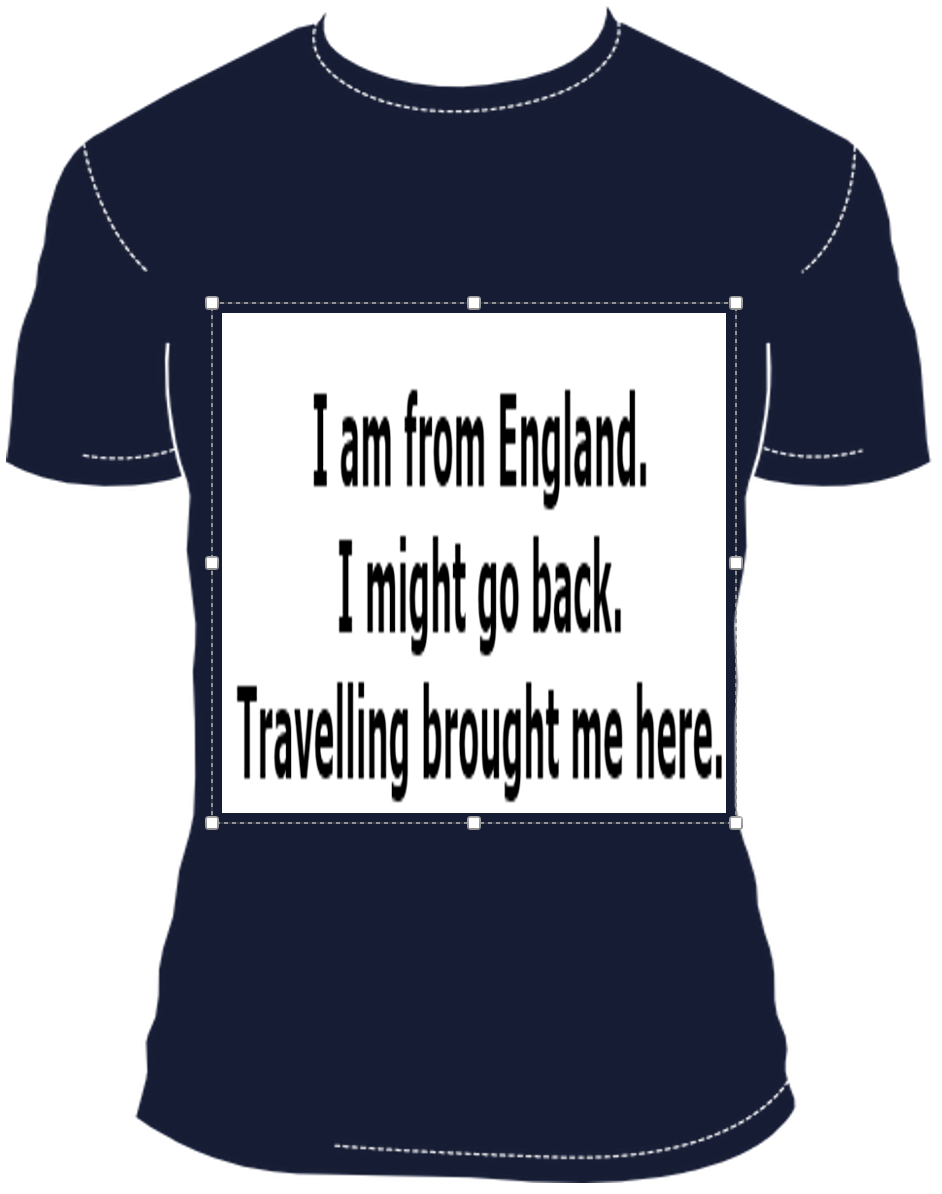
These questions are so frequently asked for most migrants. When I was first a migrant, I often wished I had a t-shirt with the answers printed on them. I’m sure the questioner’s intentions are genuine and kind, but I now find myself pausing prior to answering. What do they want to hear? How do I answer? 


‘Where are you from’

I am from England. Images of tea-drinking- weather-obsessed- whinging-poms living in Downton Abbey or Coronation Street appear between me and the questioner. I am not that. If I answer I am from London stereotypes of Camden Market punks, opera and Eastenders pop up. I am not that either. My mother did come from East Ham, and I do drink a lot of tea, but there the stereotypes stop.

I often wonder, when asking where are you from, what are they really asking? It could be:

5 Jul 2016

12 Ways To Overcome Homesickness


Homesickness
Image
The feeling of longing for a connection with home. People have reported homesickness after moving house, even just around the corner. I heard of a man, happy as an immigrant in his adopted country for sixty years, felt that he 'just wanted to go home' when he reached his eighties.
Even with a fulfilling life in a different place from your original home, you may still feel a desire to be connected to your past home. You are homesick.

Homesickness can take many forms and affect people in different ways.

20 Jun 2016

Migrant groups. Good or bad?

Whether a pair of migrants befriend each other or a neighbourhood has a density of a particular ethnicity, such as in Chinatown, migrants are drawn to each other. As humans, we like to find people similar to ourselves. Migrants, in an environment surrounded by the unfamiliar, are often drawn to the familiar. Migrant groups, or migrant cluster groups, can provide this familiarity.

Large migrant groups such as in Chinatown are common in major cities. Labelled as such, we know in that area we expect a wide variety of Chinese food and shops, and a concentration of Chinese migrants. Other nationalities gather with a similar density in particular suburbs or neighbourhoods in cities. Why do migrant cluster groups happen and what are they good/bad for?

15 May 2016

Families of immigrants left behind - what do they think?

“I feel frustrated she is not around. The time difference is annoying. I can’t call her up like I used to.”
“You are leaving us? Well I hope where you are going is worth giving us up.”
When a friend or family member leaves for another country or area, they leave behind loved ones. As an immigrant, it is worth considering the point of view of the people you have left behind. Put yourself in their shoes. You have denied them:

7 Apr 2016

Technology trials away from home 101.


I bought myself a Surface Pro a week before my flight to visit my family in UK. I had visions of hours learning the ins and outs of the Pro while travelling from New Zealand. The learning didn't happen. Why?
These were the things I didn't take into account:

1 Mar 2016

When your mother dies


Margaret Baker 7 Jan 1934- 26th Jan 2016
Apologies for my blog absence. I went to England to visit my mother. Her decline in health over four weeks was rapid. She died a week before I was due to come back to NZ. Helping to care for her before she died and living a ‘life after death’ has been consuming.

I have now been back in New Zealand for ten days. The jet lag is abating, The grump (chapter 11) is being overtaken by life’s routines and I am feeling a sense of normality is knocking on the door. I can let it in if I want.

Blogs and newsletters have been due. Mental drafts have made it to paper, but not to the web.  I like to think my writing is a help to migrants going through similar situations. I couldn’t come up with ways to help myself let alone readers. As well as my mother dying there were other deaths and dying of people close to me. When death is all around you, it is difficult to see a way forward or objective observations. What I can offer is a few snippets of thoughts:

16 Oct 2015

Why Immigrants Need Empathy not Sympathy.

I had just returned from a homeland visit. An acquaintance approached me and I readied myself for the, “I bet you are glad to be back.” Instead the person said,
“It must have been so hard leaving.” I took a step back and fumbled for the handkerchief I knew I would be needing. Amongst my muddle of thoughts there was a cry of 'Eureka someone understands!' I hugged my acquaintance-now-more-of-a-friend. She welcomed the hug because we both knew she had touched me emotionally, and the hug would hide my tears.


Empathy. The understanding of emotions. Sympathy. Feeling sorry for the person. I would rather have empathy any day.
The empathy I was shown:

  • Acknowledged my sadness and made the sadness feel reasonable
  • Didn’t make me feel weak or pathetic
  • Gave me a sense of relief at someone understanding what I was going through.


There is a fine line between empathy and sympathy, and sometimes the terms are misused.
Sympathy makes me feel weak. I don’t want people feeling sorry for me, because:

It makes me feel like I have made a wrong decision to be an immigrant
  • I have burdened them with my sadness.
  • They may be thinking, if it is bad enough to make me sad, I should return to my homeland.
  • I would rather that people understand I am glad about my choices, but there are times when it is difficult or sad. 

16 Aug 2015

Getting through unsettling times

Are you feeling unsettled? It may be that you are unsettled as an immigrant or are going through an unsettled stage of life. This blog will look at ways to help with those feelings of being unsettled, whether they are because you are a migrant or because you are unsettled in life.

As a migrant feeling unsettled, you could consider:
  1. What motivated you to emigrate in the first place? Are those reasons still valid? If they are, then by reminding yourself you are in the right place, you can allow yourself to feel more settled.
  2. Perhaps your reason for migrating has been fulfilled, for example, you wanted better opportunities for your children and it is the next challenge you are facing that is making you feel unsettled as an immigrant. This could be that as you see your children pick up the host countries’ mannerisms, language, accents, and attitudes, you wonder how you can introduce some of your culture to them. Perhaps through your homeland’s food, festivals, and visits to your homeland.
  3. Try to identify, what it is exactly that is unsettling you?

22 May 2015

Immigrants are like trees, and this is not a knicker fetish!


How are immigrants like trees? What do you need to prune when you migrate? What is our underwear drawer telling us? How to get help and increase your support networks, and more on goodbyes. All this and more in the Newsletter 11.